Arteries are blood vessels responsible for carrying oxygen-rich blood from the heart to the organs and limbs. In the lower extremities, these arteries supply muscles, skin, and tissues with the oxygen and nutrients required for normal function.
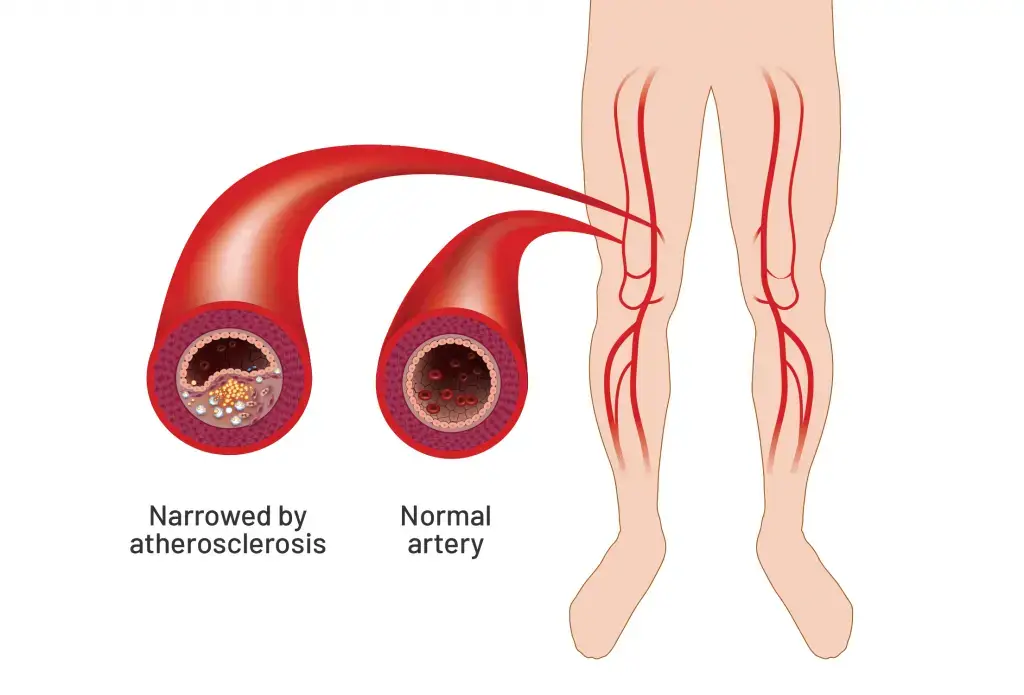
Peripheral arterial disease (PAD) occurs when these arteries become narrowed or blocked, most commonly due to atherosclerosis. Reduced blood flow limits oxygen delivery to the legs, particularly during physical activity, leading to pain and functional limitation.
PAD is a progressive condition and an important marker of generalized cardiovascular disease.
Peripheral arterial disease is a condition caused by partial or complete blockage of arteries supplying the lower limbs, most often resulting from plaque buildup inside the arterial walls.
As the arteries narrow:
PAD may affect one or both legs and can progress silently before symptoms appear.
Progressive narrowing severity levels and associated risk of reduced cerebral blood flow
Several factors increase the risk of developing peripheral arterial disease:
Risk increases after 60
Damages blood vessels
Primary modifiable risk factor
Accelerates arterial narrowing
Contributes to plaque formation
Genetic predisposition
Symptoms vary depending on disease severity and may include:
Medical evaluation is recommended if leg pain occurs during walking, at rest, or if wounds fail to heal.
Early diagnosis allows timely intervention and prevents disease progression.
Review of symptoms, cardiovascular risk factors, and physical examination of pulses.
A non-invasive test that evaluates blood flow and identifies arterial narrowing.
Further imaging may be used to assess disease severity and guide treatment planning.
Tailored based on disease severity and patient health status.
Yes. Peripheral Arterial Disease increases the risk of cardiovascular events and limb complications.
No. Many patients are asymptomatic in early stages.
While plaque cannot be removed completely, progression can be slowed and symptoms improved.
Yes. Supervised walking programs are a key part of treatment.
Surgery or endovascular treatment is considered for severe or disabling disease.
Select your preferred clinic location and fill out the form. Our team will contact you shortly to confirm your appointment time.
Response within one business day (Closed Fridays)
Your data is secure
We welcome you to our two modern facilities in the Greater Montreal area.
239 Green Street
Saint-Lambert QC J4P1S9
450 259-1399
Free street parking available directly in front of the clinic
1065 Pratt Avenue
Outremont QC H2V 2V5
514 731-7757
Free street parking available directly in front of the clinic